
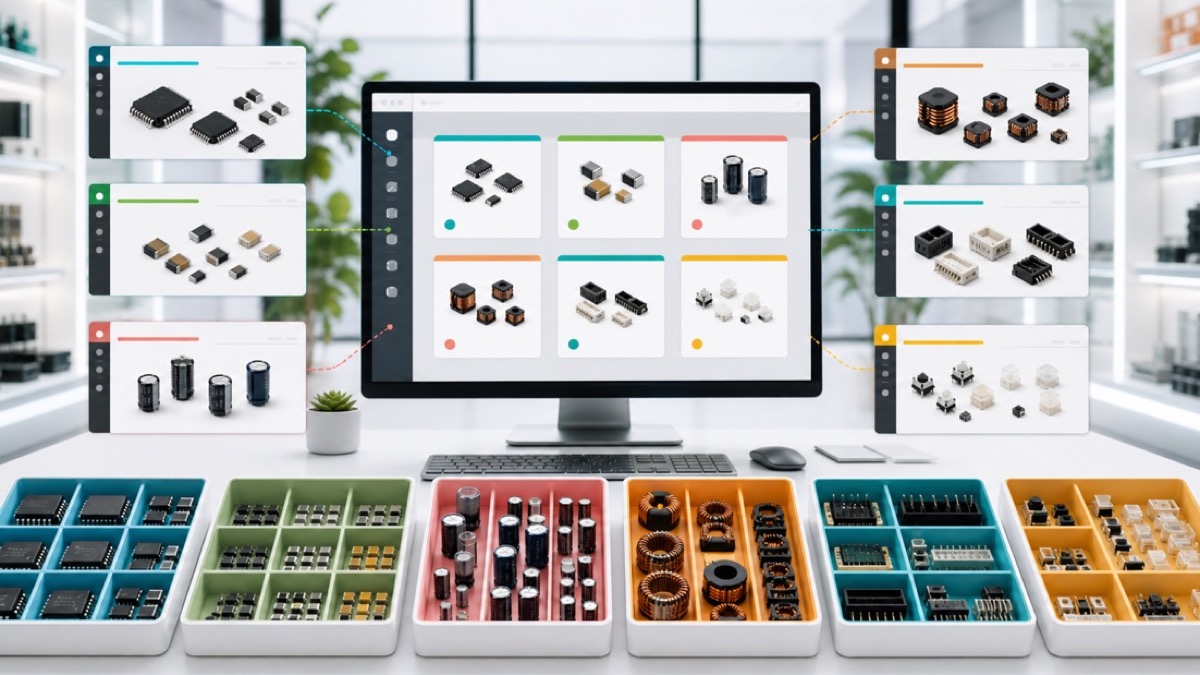
In the electronic component B2B market, brand diversity and search visibility are twin engines for business growth. A multi-brand SEO site matrix strategy involves building multiple interrelated but independent brand sites, each optimized for specific market segments, product lines, or geographies, thereby capturing a larger share of search engine results pages (SERPs). This article delves into the core elements of this strategy, from standalone store building and content planning to technical implementation, providing you with a practical guide.
1. Foundation of the Site Matrix: Standalone Store Building and Domain Strategy
The starting point of a site matrix is each brand having its own domain and hosting environment. In the electronic components field, common practice is to build a main site for the parent brand and separate sites for sub-brands or product lines (e.g., connectors, sensors, passive components). Each site should use different server IPs, registration information, and content management systems to avoid being identified as the same entity by search engines. We recommend using professional store building solutions like /en/product/mall-rfq-edition.html to ensure the underlying architecture supports multi-site management. For domain names, combine brand names with niche keywords, e.g., "brand-connectors.com" or "brand-sensors.com", and utilize Geo-AI search technology to configure top-level domains (e.g., .cn, .de, .jp) for different countries/regions.

2. Multi-Brand SEO Content Planning: Avoiding Duplication, Achieving Complementarity
The core challenge of multi-brand site matrices is content duplication. Search engines penalize duplicate content across sites. Therefore, each site must have a unique value proposition, target keywords, and content strategy. For example, the main site can cover broad terms like "electronic component distributor," while sub-sites focus on "military-grade connector supplier" or "automotive sensor manufacturer." Content types include product catalogs, technical whitepapers, application cases, and industry news. Embed /en/inquiry.html inquiry forms and /en/products.html product pages on each site to guide user conversion. Additionally, leverage Geo-AI technology from articles like /en/news/geo-ai-search-component.html to analyze user search intent across regions and dynamically adjust content priorities.
3. Link Network and Internal Linking: Building Trust Transfer Across the Site Matrix
The SEO effectiveness of a site matrix relies on a natural link network. Sites should interlink in a natural way, e.g., referencing sister site product data in technical blogs or mentioning associated brands in industry news. However, avoid excessive cross-linking (e.g., every page linking to each other) to avoid triggering manual review. For external link building, publish guest posts on electronic component industry forums and tech communities (e.g., EEWeb, Electronics Weekly) pointing to different brand sites. Also, establish independent social media accounts and industry directory listings for each site. For internal linking, follow the checklist in /en/news/component-website-seo-checklist.html to ensure clear navigation, breadcrumbs, and related product recommendations on every page.
4. Geo-AI Search Optimization: Geographic Brand Coverage
Multi-brand SEO layout must consider geographic differences. Geo-AI search technology automatically adjusts site content and keyword strategies by analyzing user location, language, and search history. For example, for the German market, use "Steckverbinder" (connector) as a core keyword on a sub-site deployed under a .de domain; for the Chinese market, use "连接器" under a .cn domain. When implementing Geo-AI, configure hreflang tags for each site to specify language and region versions. Also, use tools like /en/product/data-matrix-edition.html to integrate multilingual product databases and real-time inventory information, enhancing user experience and search engine trust.
5. Technical Architecture and Risk Management: Avoiding Search Engine Penalties
The biggest risk for a site matrix is being flagged as a "link farm" or "spam site network." To avoid penalties, ensure each site has unique content, design, contact information, and social media presence. Technically, use different CMS themes, fonts, color schemes, and page layouts. Use /en/product/source-code-edition.html for fully customizable code, giving each site unique HTML structure, CSS styles, and JavaScript behavior. Additionally, configure independent Google Search Console and Google Analytics accounts for each site to monitor search performance and anomaly indicators. Regularly audit external link quality and remove low-quality or spam links. Also, deploy structured data (e.g., FAQ, BreadcrumbList) following the guidelines in /en/news/faq-structured-data-geo.html to enhance rich snippet opportunities.
6. Content Differentiation and User Journey Design
Each brand site should offer differentiated content based on different user journey stages. For example, the main site can provide industry trend reports and procurement guides, attracting senior decision-makers; sub-sites focus on product specifications, technical parameters, and procurement processes, serving engineers and procurement specialists. Use the online trading features of /en/product/online-trade-edition.html to embed real-time quotes, bulk inquiries, and RFQ systems on sub-sites, shortening conversion paths. Also, naturally insert /en/faq.html blocks to answer frequent customer questions about "component lead times" or "minimum order quantities," increasing page dwell time and authority.
7. Monitoring, Iteration, and Long-Term Maintenance
A site matrix is not a one-time project but an ecosystem requiring continuous monitoring and optimization. Analyze each site's search rankings, traffic sources, and conversion rates monthly, identifying underperforming sites and adjusting strategies. Use Geo-AI tools to detect changes in regional search trends and update keywords and content promptly. For new brand sites, adopt gradual external link building and content publishing to avoid risks from rapid activity. Also, stay updated on search engine algorithm changes (e.g., Google's Helpful Content Update), ensuring all content prioritizes user value over SEO alone.
Frequently Asked Questions (FAQ)
Q: Can a site matrix with multi-brand SEO be considered cheating by search engines?
A: As long as each site provides unique, valuable content and follows search engine guidelines (e.g., avoiding duplication, using natural links), a site matrix is a legitimate SEO strategy. The key is content differentiation and independent operation, not simply creating many low-quality sites for ranking. We recommend referring to Google's Webmaster Guidelines and conducting regular compliance audits.
Q: Is a site matrix suitable for small electronic component businesses?
A: If the business has multiple product lines or target markets and sufficient resources (content team, technical capability), a site matrix can yield significant returns. Otherwise, it's advisable to focus on one main site first, building authority through in-depth content and precise keywords. Small businesses can start by optimizing the main site's geographic coverage with Geo-AI technology, then expand the matrix as they scale.
Q: How to measure the ROI of a site matrix?
A: Key metrics include organic search traffic per site, keyword ranking changes, inquiry/order conversion rates, and brand search volume growth. Use Google Search Console and paid tools (e.g., Ahrefs, SEMrush) to track cross-site data. Also, compare overall market share and sales lead costs before and after implementation to assess long-term benefits.
To learn more about customizing a site matrix solution for your electronic component business, contact our expert team via /en/contact.html. Also, we recommend reading the article /en/news/choose-storefront-edition.html to understand how to select the most suitable standalone store version for your business.